Less Gear, More Trail: A Minimalist Approach to Backpacking
How to build a lightweight backpacking kit on a budget. Practical minimalist gear philosophy, smart swaps, and where to find deals on proven gear.

How this guide was built
Prices shown are tracked in real time across 18+ outdoor retailers including US and Canadian stores. We monitor sale pages, clearance sections, and seasonal promotions automatically.
Gear lists are curated by our team based on current deals, not paid placements. We select items that offer genuine value — real discounts on quality gear from established brands. Prices update as retailers change them.
Seasonal patterns described in this guide are based on historical pricing data we've tracked across multiple clearance cycles.
You're eight miles in, your shoulders ache, and your back is soaked through. You reach into your pack for the cast iron skillet you swore you'd use this trip — and it hits you. You brought this. You carried it up three mountains for a trip that doesn't even involve cooking.
The realization that less gear equals more enjoyment isn't exactly revolutionary. But actually doing something about it requires a different way of thinking about what you carry.
This isn't about chasing gram counts or spending $600 on a Dyneema shelter. It's about being intentional — asking why each item earns a spot in your pack, and having a good answer ready.
The Question That Changes Everything
Before you evaluate any piece of gear, ask yourself: did I use this on my last three trips?
If the answer is no — or even "only once, briefly" — it probably doesn't belong in your pack. Not because you're being punished, but because you're carrying the weight of something you don't actually need.
Then ask a second question: can something I'm already carrying do this job?
A rain jacket can be your wind layer. Trekking poles can support your shelter. Your pot can be your mug. Your buff can be a hat, a neck gaiter, and a towel. Every item that does two things is carrying its weight twice.
This isn't about deprivation. It's about recognizing that every item you carry costs you energy, speed, and ultimately enjoyment. The goal is to carry exactly what you need and nothing more.
The Big Three: Where 60% of Your Weight Lives
Your shelter, sleep system, and pack account for roughly 8–12 pounds in a traditional setup. These same three items can be cut to 4–6 pounds with smart choices. That's where the real weight savings happen.
Shelter
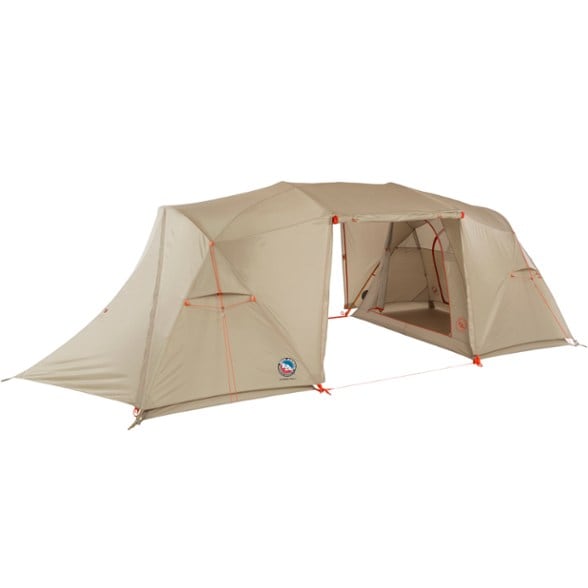
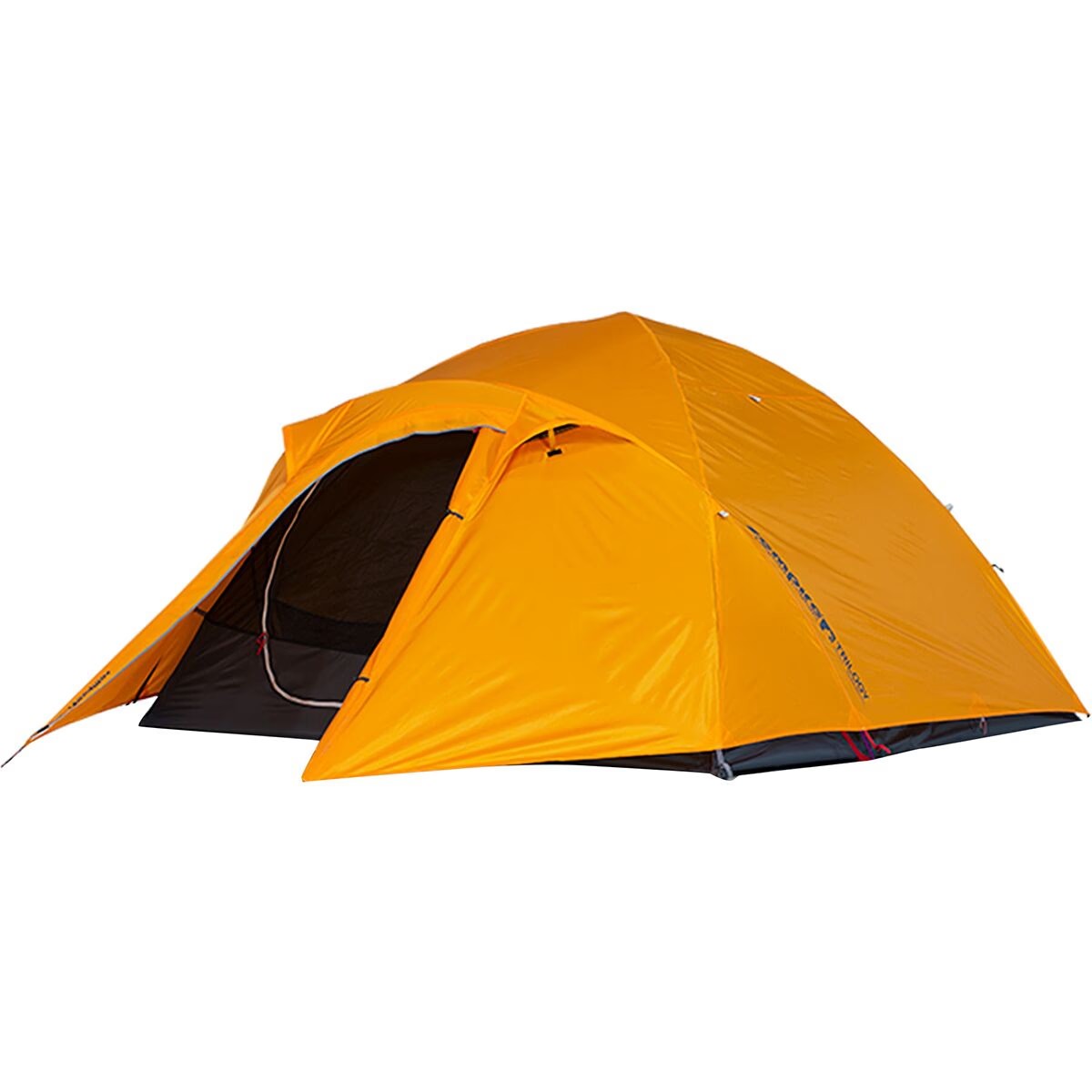
A six-pound four-person tent sits on one end of the spectrum. A one-pound tarp sits on the other. Most backpackers should land somewhere in the middle: a lightweight two-person tent or trekking pole shelter in the 2–3 pound range.
Think about what conditions you'll actually face on your trips, not the worst-case scenario. For solo trips, a Big Agnes Tiger Wall or Fly Creek offers real weight savings without compromising weather protection.
Sleep System
This is where people overshoot. A quilts-versus-bags debate aside, what matters is temperature rating and honesty. Don't buy a -18°C bag for summer trips. You're not just hauling extra insulation — you're paying hundreds of dollars for warmth you'll never use.
A 30–40°F bag is perfect for three-season use. It's light, it packs small, and you're not carrying insulation engineered for conditions you'll never encounter. If you do shoulder-season trips, a 20–30°F bag covers you without going overboard.
Pack
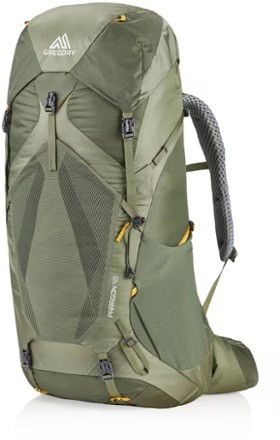
Here's the surprise: a lighter kit means a lighter pack. A 50–60L pack is overkill if your Big Three are already trimmed. Consider a 35–45L frameless or ultralight framed pack. As you dial in your system, you may find you don't need all that volume.
Minimalist Backpacking Kit
4 items
The Stuff That Actually Matters (and the Stuff That Doesn't)
Kitchen: Strip It Down
The minimalist kitchen is a 750ml titanium pot, a long-handled spoon, and a canister stove. That's it. No plates. No mugs — drink from the pot. No elaborate cookware sets.
Cold-soaking eliminates the stove entirely if you're ready for that move: throw pasta or oats in your pot the night before, eat it cold, move on.
Clothing: The Layering System Most People Get Wrong
A realistic three-season clothing kit: base layer top, insulation layer (fleece or puffy), rain shell, hiking shorts or pants, and sleep clothes. That's five to six items. Not twelve.
People over-pack clothing more than anything else because they're afraid of being cold or looking bad on the trail — neither of which matters once you're walking.
The Comfort Items Question
A camp chair. An inflatable pillow. Camp shoes. A book. These are personal. The minimalist approach isn't "never bring comfort items" — it's "know what YOUR comfort items are and cut everything else ruthlessly."
If a two-ounce inflatable pillow means you sleep well, it's earned its place. If a camp chair doesn't get sat in, it's weight you don't need.
How to Evaluate Any Piece of Gear
A simple framework for every item in your pack:
Weight vs. Function — What does it weigh, and what job does it do? A two-pound tent that shelters you is better value-per-gram than a one-pound camp chair.
Multi-Use Potential — Does it do more than one thing? Trekking poles that support your shelter. A buff that's a hat, gaiter, and towel. Multi-use items earn their weight twice.
Durability vs. Weight — Ultralight gear is often more fragile. Be honest about how careful you are with your gear and where you hike. Rocky terrain demands more durability. Established trails can take more risks.
The "Would I Notice?" Test — If you left it home, would you notice? If the answer is "probably not until I really needed it," that's a red flag. If the answer is "immediately, every single day," it stays.
Going Light Doesn't Have to Mean Going Broke
The ultralight industry has a pricing problem. Cottage gear runs $400–600 per item. But major brands make lightweight gear too, and it goes on sale constantly because they're caught in the seasonal retail cycle that small brands aren't.
The sweet spot: mainstream brand lightweight gear at end-of-season prices. A $300 tent that drops to $180 in spring. A $250 sleeping bag hitting $125 in March. You're getting 85% of the gram savings at 40% of the cost.
Spring (March through May) and fall (September through November) are when backpacking gear sees its deepest discounts. You don't need to buy your entire kit at once — build it over two or three sale cycles.
The best gear is the gear that disappears. You stop thinking about the weight. You stop fiddling with straps. You just walk, and your pack walks with you. That's the real point of going light — not the number on a scale, but the feeling on the trail when your pack isn't fighting you anymore.
The trail rewards the intentional.
Prices and availability change constantly. Track the gear you want and we'll let you know when it's time to buy.
See a deal you like? Set a target price.
We'll watch it across 18+ retailers and email you when it drops.
Track a price on any product
Explore More Guides
Shop Related Deals
Get notified about new guides
We publish gear guides, deal calendars, and buying strategies. Get them in your inbox — no spam, unsubscribe anytime.